Learn AI from free YouTube videos, in a sensible order.
Every step is one video and, where it helps, one GitHub repo to code along with. No books, no paywalls, no playlists to sort through. Tick steps off as you go; your progress stays in your browser.
Continue learning43 roadmaps · 540 videos · 269 hours · 165 repos · free, no account
 Python from zero2h 02m
 NumPy arrays58 min
 Pandas for data1h 34m
 Plotting with Matplotlib31 min
 Vectors10 min
Roadmaps
Recently added: AI for Finance (Nov 13) · World Models (Nov 9) · Self-Supervised & Contrastive Learning (Nov 8)
01Python & Math for AI
The Python, NumPy, linear algebra, calculus, and probability you actually need before touching models.


 02
Machine Learning
Classic ML the way practitioners use it: regression, trees, boosting, evaluation, and scikit-learn.
 03
Deep Learning
Neural networks from the inside: backprop, build your own autograd, CNNs, RNNs, and PyTorch.

 04
LLMs from Scratch
Understand and build GPT: tokenizers, attention, transformers, GPT-2, Llama, mixture of experts.

 05
AI Engineering
Build real products on top of LLMs: prompting, APIs, structured output, RAG, evals, and local models.


 06
AI Agents & MCP
Agents that call tools, use MCP servers, plan, and coordinate, and how to tell if they work.


 07
Fine-Tuning & Reasoning Models
Adapt open models with LoRA, align them with RLHF and DPO, and train reasoning with GRPO.


 08
Computer Vision
Teach machines to see: CNNs, transfer learning, YOLO detection, segmentation, ViT, and CLIP.

 09
Generative AI: Images & Video
How machines create images and video: VAEs, GANs, diffusion, latent diffusion, and flow matching.

 10
Run, Serve & Scale AI
Get models into production and make them fast: Docker, MLOps, monitoring, quantization, vLLM, GPUs, and FSDP.

 11
Reinforcement Learning
Agents that learn by trial and error: from Bellman equations and Q-learning to PPO, AlphaGo, and the RL behind reasoning models.

 12
Speech & Audio AI
How machines hear and speak: waveforms, spectrograms, speech recognition with Whisper, text-to-speech, audio codecs, and voice agents.


 13
Robotics & Embodied AI
Teach robots with data: robot learning basics, imitation learning, ACT, diffusion policies, vision-language-action models, and sim-to-real.


 14
Interpretability
Open the black box: circuits, superposition, sparse autoencoders, induction heads, grokking, and tracing what LLMs compute.


 15
AI Safety & Alignment
Why powerful AI can go wrong and what researchers do about it: specification gaming, inner alignment, deception, oversight, and evals.


 16
Recommender Systems
How Netflix, YouTube, and TikTok pick what you see: collaborative filtering, matrix factorization, two-tower retrieval, ranking, and evaluation.
 17
Time Series & Forecasting
Predict what happens next: trend, seasonality, ARIMA, boosted trees, deep models, and today's pretrained forecasting models.

 18
Graph Neural Networks
Learn from data shaped like networks: node embeddings, message passing, GCN, GAT, GraphSAGE, link prediction, and real uses.


 19
Multimodal & Vision-Language Models
How models see and talk: CLIP, SigLIP, Flamingo, BLIP-2, LLaVA-style models, and building a vision-language model yourself.


 20
GPU Programming & CUDA
Understand why GPUs are fast and write your own kernels: CUDA basics, memory, tiled matmul, Triton, and FlashAttention.


 21
Data Engineering for AI
Move, store, clean, and version the data that models learn from: SQL, Parquet, DuckDB, pipelines, labeling, and LLM-scale dataset curation.

 22
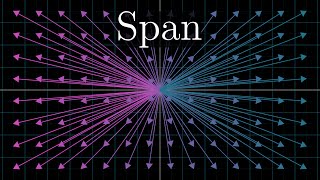
Math for ML, Deeper
The next layer of math behind ML papers: change of basis, SVD, Jacobians, Hessians, convexity, Lagrange multipliers, Gaussians, and KL divergence.

 23
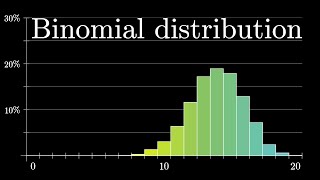
Bayesian ML & Probabilistic Programming
Reason with uncertainty: priors and posteriors, MCMC, PyMC, hierarchical models, Gaussian processes, variational inference, and Bayesian deep learning.


 24
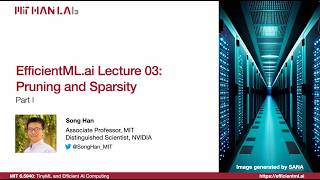
TinyML & Edge AI
Shrink models and run them on microcontrollers, phones, and small boards: pruning, quantization, distillation, TFLite Micro, Edge Impulse, ONNX, and ExecuTorch.


 25
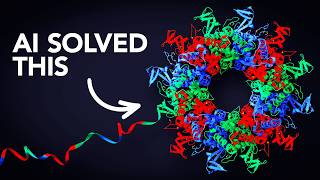
AI for Science
How AI is changing biology and chemistry: protein folding, AlphaFold, protein language models, protein design, molecules in Python, and AI weather models.


 26
Knowledge Graphs & GraphRAG
Store facts as connected entities, query them with Cypher, build graphs from text with LLMs, and use them for retrieval that follows relationships.


 27
Synthetic Data & Data-Centric AI
Improve models by improving their data: find label errors, label less, augment, generate synthetic tables and LLM training sets, and know when synthetic data backfires.


 28
Federated Learning & Privacy-Preserving ML
Train models without collecting the data: federated averaging, Flower simulations, differential privacy, secure aggregation, encryption, and the attacks these defend against.


 29
Causal Inference & Causal ML
Go from 'X is correlated with Y' to 'X causes Y': potential outcomes, causal graphs, matching, natural experiments, and machine learning for treatment effects.


 30
Evaluation & Benchmarking for LLMs
Measure language models and LLM apps properly: classic metrics, public benchmarks and leaderboards, LLM judges, error analysis, and open-source eval tools.


 31
Quantum Machine Learning
Learn qubits, gates, and circuits, then train variational circuits, quantum classifiers, and quantum kernels, and see where the limits are.


 32
LLM Security & Red Teaming
Learn how LLM apps get attacked, from prompt injection and jailbreaks to data extraction and poisoning, then test and defend your own.


 33
Medical AI & Imaging
Work with medical images and clinical data: DICOM, segmentation with U-Net, MONAI, and nnU-Net, pathology, foundation models, bias, and regulation.


 34
Self-Driving Cars & Autonomous Systems
Follow the self-driving stack from sensors and localization through perception, prediction, and planning to end-to-end models and simulation.


 35
Mixture of Experts & Efficient LLM Architectures
See how modern LLMs grow without getting slower: sparse mixture of experts, cheaper attention, linear attention, state space models, and hybrids.
 36
3D Vision, NeRFs & Gaussian Splatting
Turn photos into 3D: camera geometry, stereo, structure from motion, depth networks, neural radiance fields, Gaussian splatting, and feed-forward reconstruction.
 37
Explainable ML: SHAP, LIME & Model Debugging
Explain what your models do and why: glass-box models, feature importance, PDPs, LIME, SHAP and its limits, counterfactuals, saliency maps, and error analysis.

 38
Classic NLP Before LLMs
The NLP toolkit that came before transformers: tokenizing and normalizing text, TF-IDF, n-grams, Naive Bayes, HMM tagging, NER, topic models, word vectors, and seq2seq with attention.

 39
Anomaly Detection
Find the rare and the unusual: statistical outliers, distance and density methods, isolation forests, one-class SVMs, autoencoders, fraud with imbalanced data, and explaining why a point was flagged.

 40
Document AI & OCR
Get text, tables, and fields out of scans and PDFs: image cleanup, classic OCR engines, handwriting recognition, layout-aware models, PDF-to-Markdown tools, and vision-language models that read pages directly.
 41
Self-Supervised & Contrastive Learning
How models learn strong features from unlabeled data: contrastive losses, SimCLR, BYOL, masked autoencoders, DINO through DINOv3, and JEPA's predict-the-representation idea.


 42
World Models
Models that learn how an environment responds to actions, then plan or train agents inside it: model-based RL, Dreamer, MuZero, Genie, world foundation models, and JEPA-style planning.

 43
AI for Finance
Machine learning for markets and money: how quant firms work, portfolios and factors, honest backtesting, financial text, credit risk, and LLMs in finance. Education, not investment advice.
No roadmap matches that yet. Try another word.
Pick a path
Total beginner
Developer building with AI
How LLMs really work
Production and performance
Data scientist
Trustworthy LLM apps
Vision to 3D worlds
Repos worth starring
The repositories these roadmaps code along with.
Questions
How can I learn AI for free?
Pick a roadmap and watch its videos in order. All 43 roadmaps are made of free YouTube videos and open-source GitHub repos, with no sign-up, paywall, or trial.
Where should a complete beginner start?
Start with Python & Math for AI (6h 54m of video), then Machine Learning and Deep Learning. After that, choose a roadmap for what you want to build: LLMs, agents, computer vision, generative AI, or deployment.
How long does each roadmap take?
Between 3h 06m and 22h 04m of video, 269 hours in total. Plan for about twice that if you code along and build one of the projects at the end of each roadmap.
Do I need an account to track my progress?
No. Tick off each step as you finish it. Your progress is saved in your browser, and nothing is sent anywhere.
How are the videos chosen?
One specific video per step, never a whole playlist. Clear and short beats famous and long, every video is free to watch, and links are checked regularly so dead videos get replaced. Anyone can suggest a better one on GitHub.